The Social Good Series merged a design process with a hackathon, giving cross-functional volunteer teams time to turn local community needs into tangible work.
Reconstructed from a 2018 planning document, original participant feedback, and supplied event photographs.
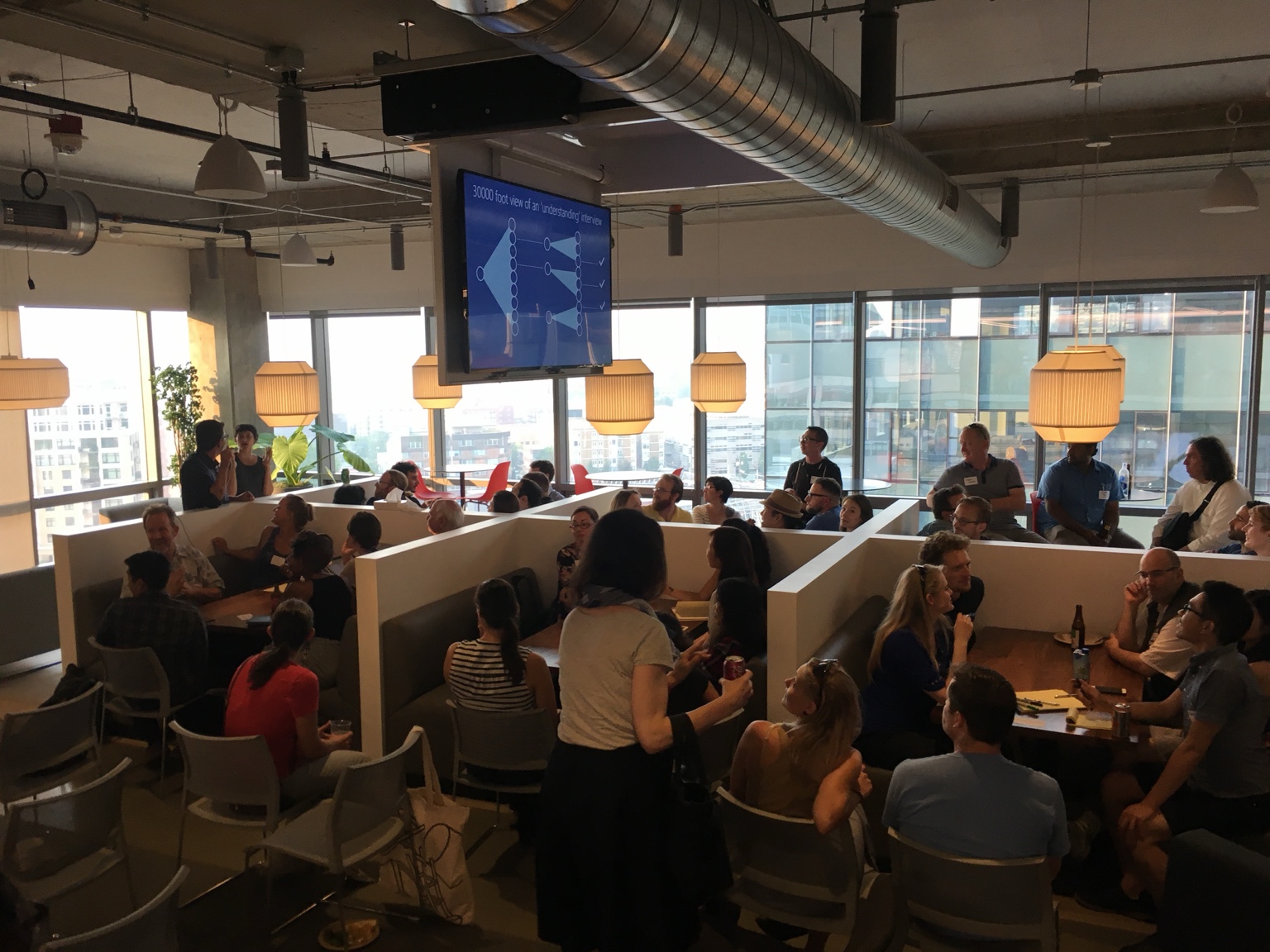
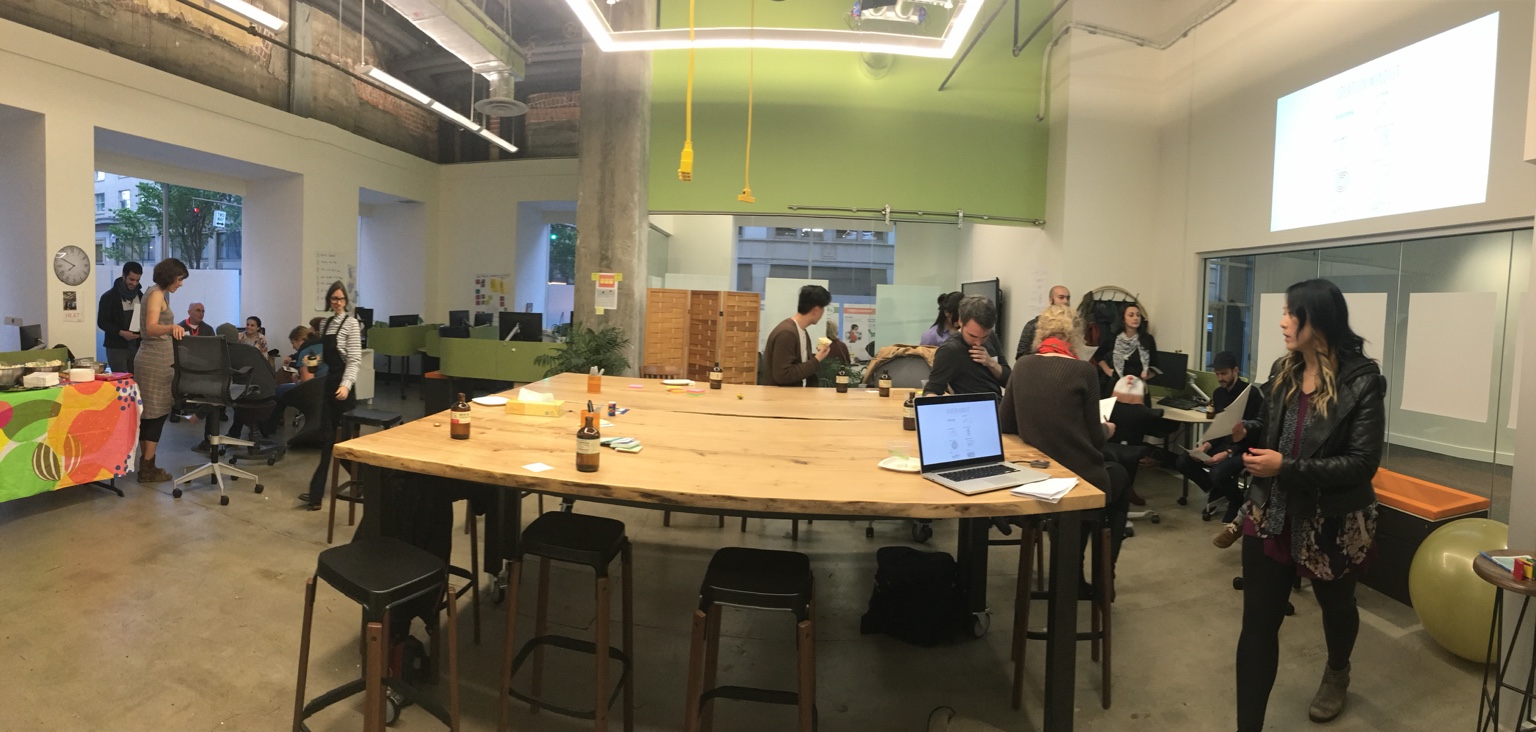
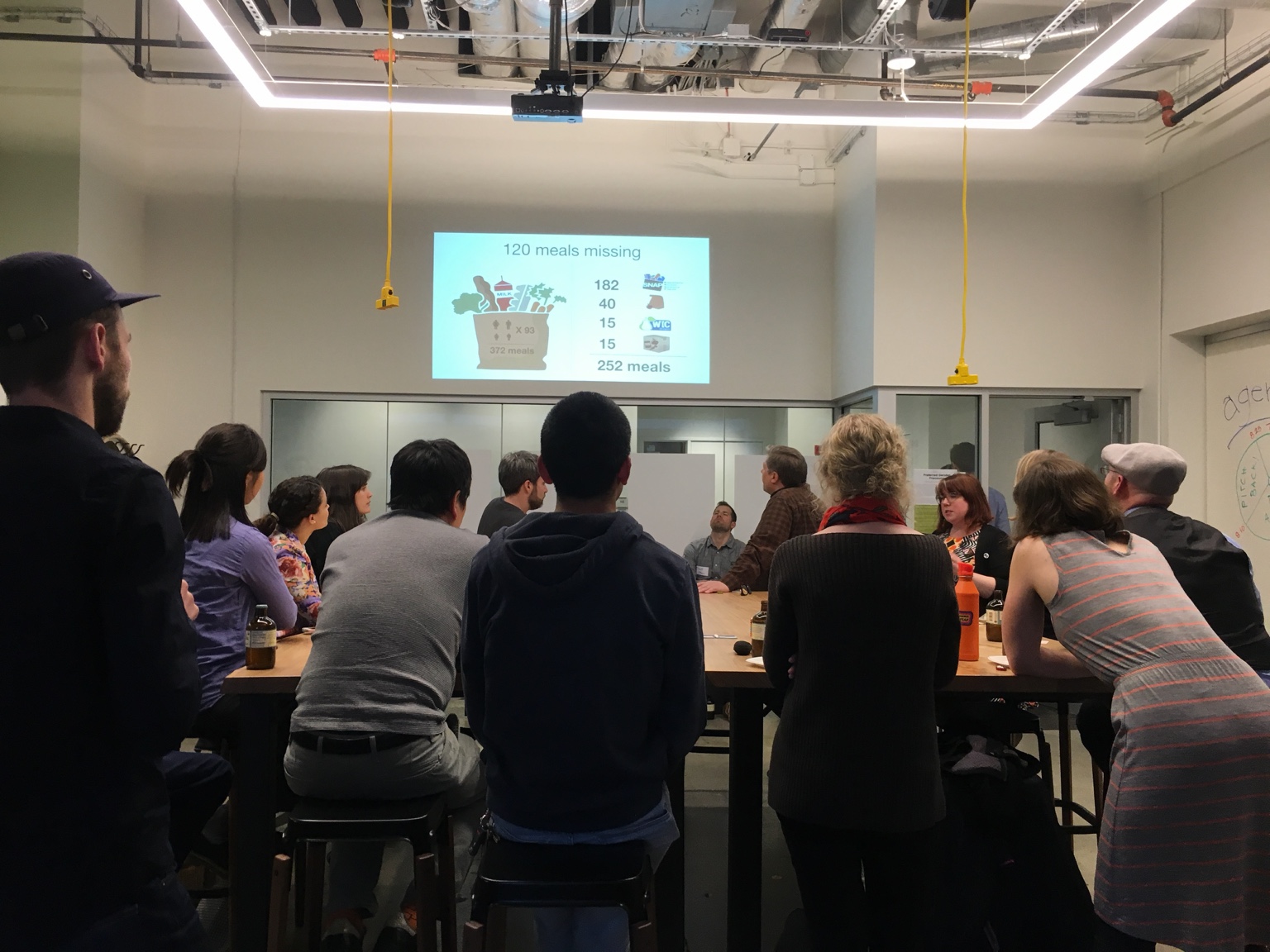
Teams at work · 2017300+
people participated across the series
20
initial projects entered the process
8
project folders remained by the final phase
4
teams reached the hackathon
The actual shape
More runway than a one-day sprint.
The series ran through the summer in partnership with Open Seattle and IxDA Seattle, culminating in a hackathon and presentations during the Seattle Design Festival.
01
Civic Mixer
Community organizations introduced their challenges and met volunteers from design and technology.
02
Research Workshop
Teams gathered evidence, framed research questions, and developed a shared understanding of each issue.
03
Design Workshop
Research moved into ideas, concepts, roles, and early plans that teams could carry into production.
04
Hackathon
Four remaining teams iterated, presented, and tested their work during the Seattle Design Festival.
Participants selected among community projects and offered skills in UX, web development, research, data science, and graphic design. The intention was not only to generate ideas, but to research, design, execute, and learn together.
“I really love the idea of bringing together nonprofits, designers, and technologists in the same room.”Organization participant · post-event feedback
Mapping the workMaking the problem visible
38 attendee responses
The surviving attendee form captured interest, skills, project preferences, and availability.
Seattle-based collaboration
Open Seattle and IxDA Seattle convened the series with local community organizations.
6 organization responses
The source itself flags this as too little feedback and proposes collecting input after every event.
Who it invited
Different levels of time, confidence, and expertise.
01
Project initiators
People arriving with an idea or community problem already in hand.
02
Practitioners
Designers and software professionals looking to contribute their working skills.
03
Emerging talent
Recent graduates and career changers seeking experience and meaningful portfolio work.
04
Flexible contributors
People joining around the edges, available for smaller tasks or specialist help.
Eight surviving project records
What the teams set in motion.
The names and known problem statements below come from the archive. Generic imagery has been removed; each box marks the exact artifact still needed.
Project evidence neededAdd the 2017 brief, team roster, presentation, and continuation timeline.
Civic technology
Democracy Lab
The source framed the challenge as government procurement favoring more established projects. DemocracyLab continued beyond the series and is the clearest surviving line of impact.
Project evidence neededAdd the project lead, research, prototype, and final presentation.
Civic participation
Pinion
A project responding to elected officials’ limited methods for engaging citizens in policy decisions.
Project evidence neededAdd the research question, team, working files, and outcome.
Community data
Mapseed
A project exploring how governments could receive real-time, location-based input from residents.
Project evidence neededAdd the original organization, problem statement, team, and prototype.
Housing
Housing
A named project folder survived, but the reconstruction notes do not identify its organization, team, intervention, or final result.
Project evidence neededConfirm whether the DESC dashboard became this project and add its artifacts.
Housing stability
Homelessness
The archive references a DESC concept for a dashboard comparing people housed with estimated homelessness counts.
Project evidence neededAdd the organization, problem, research question, team, and outcome.
Mobility
Transportation
A project folder remains in the record, but no reliable brief or final outcome is documented in this source.
Project evidence neededAdd the brief, participants, workshop outputs, and later status.
Equity
Social Equity
A project folder remains in the record, awaiting the people, community need, working materials, and follow-up story.
Project evidence neededAdd the partner organization, team, intervention, and presentation.
Community access
Immigrant & Refugee
A project folder remains in the record, but this reconstruction document does not contain enough evidence to describe the work.
What endured
Success was larger than survival.
DemocracyLab continued. Other outcomes remain unverified. The record also preserves something valuable: a candid account of what the series made possible and where its operating system was incomplete.
01
Continued
DemocracyLab remains the confirmed continuing project.
02
Connected
Organizations met people who could help advance their work.
03
Practiced
Volunteers applied research, design, technology, and facilitation skills.
04
Documented
Forms, decks, evaluations, and event materials established a partial record.
05
Unresolved
Seven project histories and most long-term outcomes still need reconstruction.
2018 reflection on 2017
What the archive already teaches.
Keep
The multi-event runway: mixer, research, design, and hackathon created more depth than a single-day event.
Facilitate
Give each organization a designated contact and prepare both project leads and volunteers to communicate across disciplines.
Show examples
Participants asked for more talks and examples of civic technology combining nonprofits, design, and technology.
Instrument
Treat forms as a continuous feedback loop—after every event, not only at the end.
Archive
Mandate a brief, team roster, research question, prototype, presentation, and follow-up for every project.
Follow through
Plan explicit 1-, 3-, 6-, and 12-month check-ins so continuation does not depend on memory.
Complete the record
What to find next.
The briefs, teams, prototypes, and presentations for the seven unresolved project folders
The hackathon layout, logistics, participant list, and retrospective
Three final presentation decks that were not preserved in Google Slides
Organizer, facilitator, partner, sponsor, and community-organization credits
Workshop artifacts: prompt cards, journey maps, personas, datasets, and evaluation forms
Participant follow-up at 1, 3, 6, and 12 months—including why projects continued or stopped
Primary source
SGS — 2018 Design Sprint
This document was written while reviewing the 2017 folders and planning a repeat. It is both evidence and interpretation; claims not supported there remain visibly unresolved.